






LaserVision

Treatment at a glance

5 mins per eye

Numbing drops

3 days

Long-term

Fast healing

What is Phototherapeutic Keratectomy?

PTK (Phototherapeutic Keratectomy) is a specialised laser procedure used to treat problems affecting the front surface of the cornea (the clear window at the front of the eye). Unlike LASIK, which is designed to correct vision (short-sightedness, long-sightedness and astigmatism), PTK is primarily performed to improve corneal clarity and smoothness, relieve symptoms, and restore a healthier corneal surface.

PTK

PTK is ideal for patients where the issue lies on the front layers of the cornea. A detailed assessment with corneal scanning helps determine whether PTK is appropriate and whether any additional treatment is needed.

PTK is commonly used for:

  • Corneal surface scars (from injury, infection, or previous surgery)
  • Recurrent corneal erosions (where the corneal surface repeatedly breaks down, causing pain and light sensitivity)
  • Corneal dystrophies such as Anterior Basement Membrane Dystrophy (EBMD) and Map-Dot-Fingerprint Dystrophy
  • Superficial corneal opacities and irregularities that reduce vision quality
  • Certain cases of band keratopathy (calcium deposits on the cornea)

PTK is ideal for patients where the issue lies on the front layers of the cornea. A detailed assessment with corneal scanning helps determine whether PTK is appropriate and whether any additional treatment is needed.

PTK is commonly used for:

  • Corneal surface scars (from injury, infection, or previous surgery)
  • Recurrent corneal erosions (where the corneal surface repeatedly breaks down, causing pain and light sensitivity)
  • Corneal dystrophies such as Anterior Basement Membrane Dystrophy (EBMD) and Map-Dot-Fingerprint Dystrophy
  • Superficial corneal opacities and irregularities that reduce vision quality
  • Certain cases of band keratopathy (calcium deposits on the cornea)
Read more
Treatment Benefits Benefits

PTK: Key Benefits

  • Quick, painless procedure lasting less than 5 minutes per eye
  • Reduces or eliminates the recurrence of painful epithelial erosions
  • Smooths an irregular corneal surface
  • Can delay or avoid the need for more invasive surgery
  • Fast healing compared with major surgery

How is a Phototherapeutic Keratectomy performed?

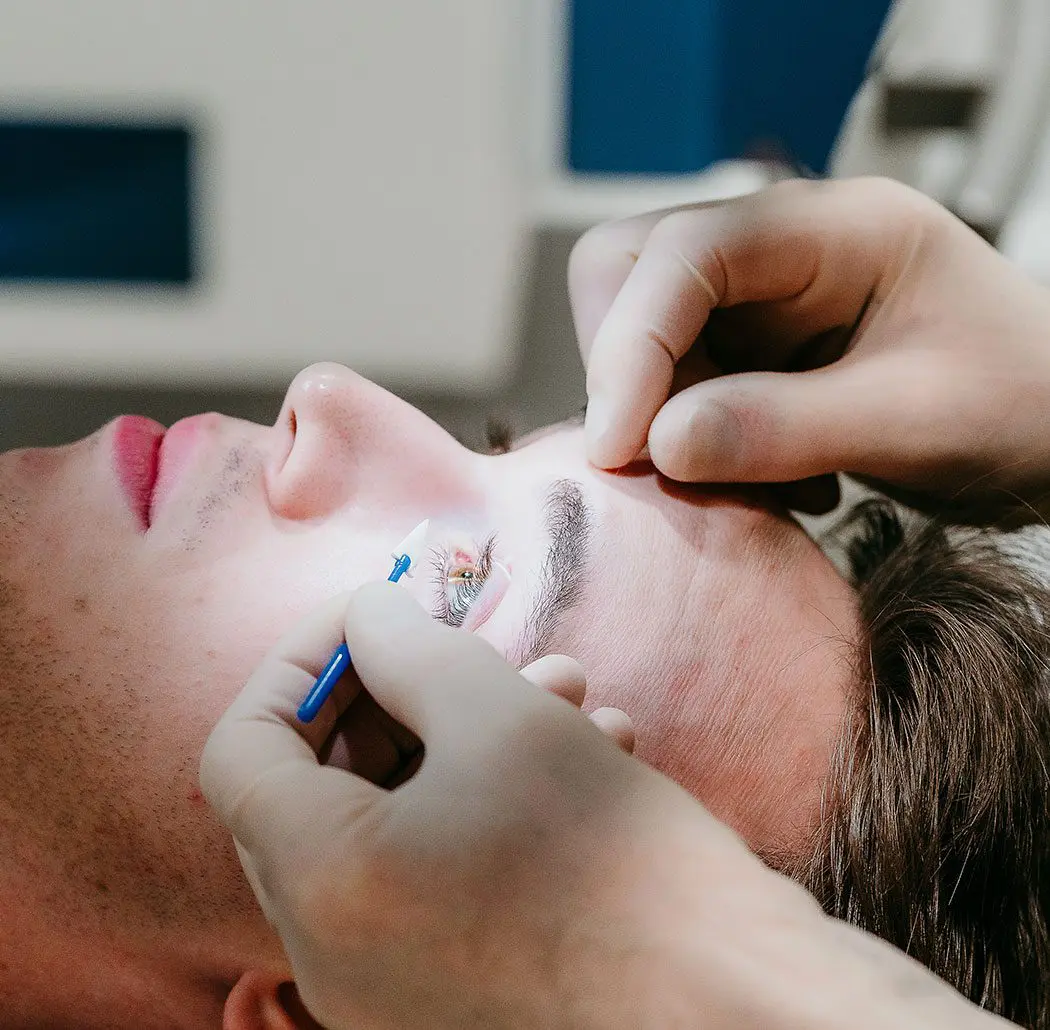
  • 1.Local anaesthetic eye drops are applied to both eyes
  • 2.A solution of alcohol is used to gently separate the cells from the surface of the cornea
  • 3.The cells are gently rolled aside
  • 4.The Schwind Amaris 1050RS is then used to therapeutically remove the defective tissue
  • 5.A contact lens is placed on the surface to act as a bandage and no stitches are required
LaserVision-Treatments-PTK-How
LaserVision-FAQ-Main

PTK (Phototherapeutic Keratectomy) is a therapeutic laser treatment that improves the health and smoothness of the front surface of the cornea. It is used to treat conditions such as corneal scars, corneal dystrophies, and recurrent corneal erosions.

PTK is commonly used for:

  • Recurrent corneal erosion syndrome

  • Epithelial Basement Membrane Dystrophy (EBMD / Map-Dot-Fingerprint dystrophy)

  • Superficial corneal scars (injury, infection, or previous surgery)

  • Certain corneal dystrophies (e.g., granular or lattice dystrophy affecting superficial layers)

  • Band keratopathy and superficial corneal deposits (in selected cases)

No. LASIK and PRK are refractive procedures designed to reduce dependence on glasses or contact lenses.
PTK is therapeutic, aimed at treating the corneal surface to improve clarity, smoothness, and comfort (although vision may also improve if the corneal surface is the cause of the blur).

The laser treatment typically takes 15-30 seconds, and the entire procedure is completed in approximately 5 minutes per eye.

Led by your personally assigned doctor, our clinical team will perform a thorough evaluation of your corneal condition. This will include a comprehensive eye examination, including corneal topography, endothelial cell count, and intraocular pressure.

Detailed analysis of your cornea will allow your doctor to assess whether you can undergo the procedure safely and evaluate which areas of your cornea require treatment.

Our focus with a PTK is to achieve complete satisfaction. All our patients are treated until discharge as part of the inclusive care plan. This includes all follow-up consultations and additional treatments for 6 months after your initial treatment. Although you may be discharged, all our patients remain under our care, and we encourage them to contact us should any issues arise.

Our success has depended on personalised patient care, and we believe it is paramount. All patients will see their surgeon at each visit, as the surgeon is personally responsible for your care, providing reassurance that you are receiving the best possible standard of care.

PTK surgery at LaserVision is a quick procedure, typically completed in five minutes or less.

You will lie comfortably on your back on a specialised bed, and we may offer medication to help you feel relaxed. Numbing drops are then applied to the eye, and a gentle instrument is used to keep your eyelids open.

To prepare the corneal surface, a small circular well is placed on the eye, and a carefully measured alcohol-based solution is applied for no more than 30 seconds. This allows the surface epithelial layer to separate, thereby allowing the underlying cornea to be treated.

The excimer laser is then used to remove microscopic layers of tissue with each pulse, smoothing and treating the affected area with exceptional precision. Throughout the procedure, your consultant carefully checks your eye using the microscope attached to the laser to ensure that only the minimum amount of tissue necessary is treated.

Once the laser treatment is complete, the surface cells are gently repositioned, and a bandage contact lens is placed on the eye to protect the cornea and support healing.


The procedure is performed with a topical anaesthetic, so you should not experience pain during the laser treatment.


Afterwards, it is common to experience grittiness, watering, light sensitivity, and discomfort for a few days as the surface heals.

Because PTK laser treatment targets the eye’s surface, the eye may be painful for 48-72 hours. This is entirely normal, and any discomfort can be managed with topical anaesthetic drops and oral analgesics. 

Most patients wear a bandage contact lens for a few days. The surface epithelium generally heals within 3–5 days, after which the lens is removed.


Vision usually improves gradually over 1–3 weeks and may continue to refine over subsequent weeks.

This depends on healing and vision stability:

  • Many patients return to desk-based work within a few days to a week

  • Driving is usually possible once your vision meets the legal standard, often after the bandage lens is removed (but it varies)

We will advise you individually at follow-up.

PTK can:

  • Smooth the corneal surface

  • Improve corneal clarity

  • Reduce recurrent erosions and pain episodes

  • Improve vision quality when scarring or irregularity is superficial

  • In some cases, delay or avoid more invasive surgery

All procedures carry some risk. Potential risks include:

  • Temporary blurred vision

  • Haze during healing (usually mild and treatable)

  • Infection or inflammation (uncommon, treated promptly)

  • Changes to prescription, including possible shift towards long-sightedness (more likely with deeper treatments)

  • Recurrence of the original condition over time (especially with some dystrophies)

We take careful measurements to minimise risk and maximise safety.

PTK can provide long-lasting improvement, but whether it is “permanent” depends on the condition:

  • Recurrent erosions often improve significantly and may resolve long-term

  • Some dystrophies are genetic and can recur slowly over years

  • Scars and superficial opacities may improve permanently if the underlying cause is not ongoing

We will discuss realistic expectations at your consultation.

PTK is not primarily designed to correct refractive error, so you may still need glasses for distance or reading. In some cases, vision improves because the cornea becomes smoother and clearer, but it’s best to consider PTK a therapeutic rather than refractive procedure.

Many patients with corneal surface disease also have dry eye. Dryness doesn’t automatically rule out PTK, but it may need treatment before and after the procedure to optimise healing and comfort.

Yes, PTK can be performed on both eyes, but whether it is done on the same day or separately depends on the condition being treated, your symptoms, and your lifestyle needs.

You will have:

  • Numbing drops and optional medication to help you relax

  • The corneal surface gently prepared

  • Laser treatment applied with high precision

  • A bandage contact lens placed afterwards
    You can go home the same day, but you will need someone to accompany you.

We typically review you:

  • Within 3–7 days (to remove the bandage lens once healed)

  • Again in the following weeks to monitor recovery and vision quality

Choosing the right vision correction clinic for your PTK surgery is paramount. This is a life changing procedure after all, and you need to have complete trust in your surgeon and care team of professionals.

Previous Slide Next Slide

Previous Slide Next Slide
Events