



LaserVision

Innovation

At LaserVision, we believe that thoughtful use of technology plays an important role in delivering safe, accurate and personalised eye care. We continually develop our clinical practice and invest in proven innovations that support careful assessment, precise treatment planning and evidence-based decision-making — all with the aim of improving patient outcomes and experience.

Recognised expertise. Responsible innovation.

Members of our clinical team are regularly invited to contribute to national and international ophthalmic meetings, where they share clinical experience, research insights and best practice with peers. This involvement helps us stay closely aligned with developments in ophthalmology.

LaserVision is recognised by professional bodies and accrediting organisations for its clinical standards and governance. As a result, we are occasionally invited to participate in the evaluation of emerging technologies and treatments, allowing us to carefully assess new options before they become more widely available — always guided by evidence, safety and suitability for patients.

Explore below to learn more about the selected technologies and treatments available at LaserVision.
Book a Consultation
Our Technology LaserVision Surrey

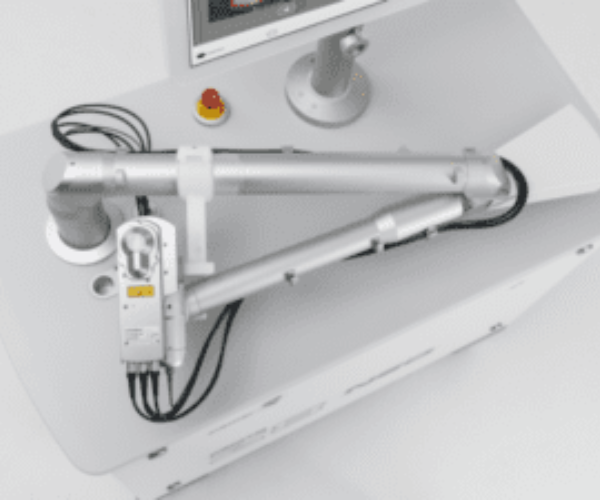
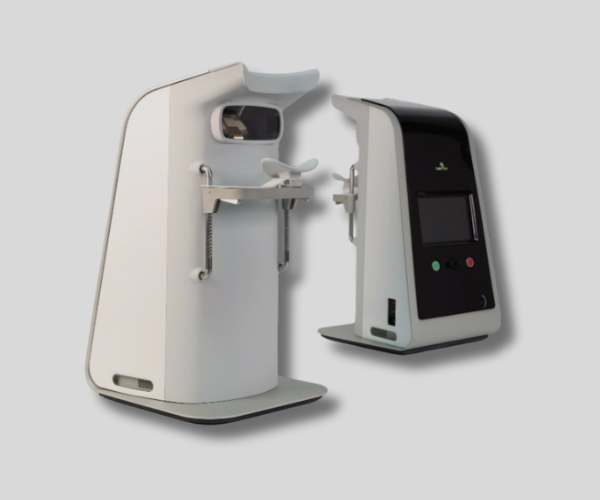
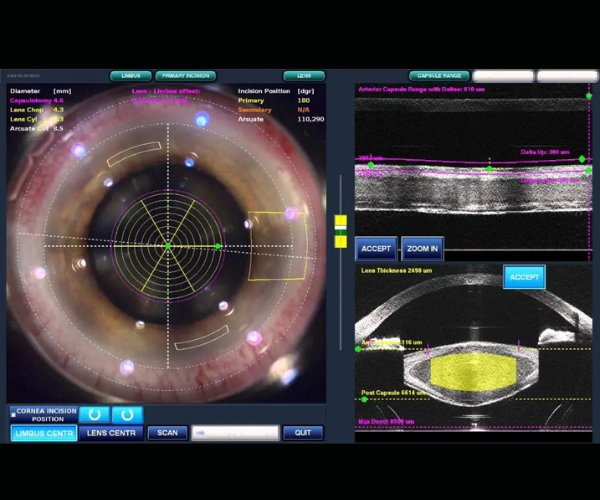
Laser-assisted cataract surgery with the Z8 femtosecond laser

Laser-assisted cataract surgery uses advanced laser technology to support key steps of cataract treatment, improving consistency and precision for selected patients.

At LaserVision, we use the Z8 femtosecond laser as part of a surgeon-led approach to cataract care, where technology complements clinical judgement—not replaces it.

The Z8 femtosecond laser can assist with specific stages of the procedure, such as creating precise incisions and preparing the lens for removal. This level of accuracy may support predictable surgical planning and is particularly helpful in cases where precise lens positioning is critical.

LaserVision introduced the Z8 femtosecond laser to the UK in 2014, reflecting our early involvement in the development and responsible adoption of automated technologies in cataract surgery. Our experience with this platform supports careful integration of innovation into established surgical practice.

Laser-assisted cataract surgery is not necessary or suitable for everyone. During your consultation, your surgeon will assess whether this approach is appropriate for your eyes and discuss the most suitable treatment options.

Ziemer Z8

Laser-assisted corneal transplant surgery with the Z8 femtosecond laser

Laser-assisted corneal transplant surgery uses femtosecond laser technology to support precise preparation of donor and recipient corneal tissue.

At LaserVision, the Z8 femtosecond laser is used as part of a surgeon-led, blade-free approach for selected corneal transplant procedures, where accuracy and alignment are particularly important.

The Z8 laser can create highly controlled corneal cuts and customised shapes, which may help support improved graft positioning and consistency during surgery. This level of precision can be especially valuable in certain corneal transplantation procedures, where tissue fit and alignment play a key role in surgical planning.

Laser-assisted corneal transplant surgery is not suitable for every patient or every type of corneal condition. During your consultation, your corneal surgeon will assess your individual needs and advise whether this approach is appropriate for you.

Optilight

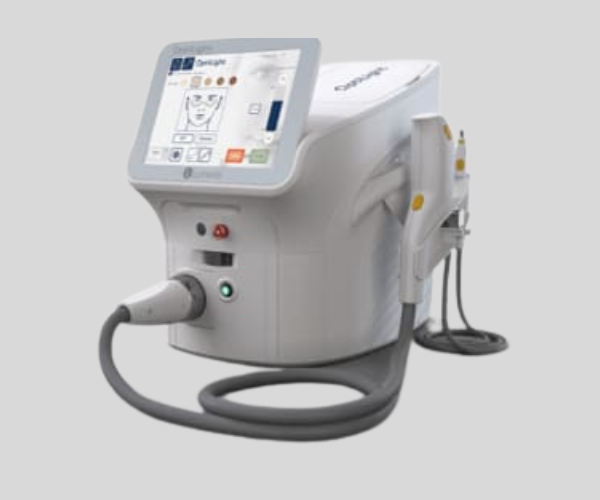
OptiLIGHT IPL for dry eye disease

OptiLIGHT Intense Pulsed Light (IPL) is a non-invasive treatment used in selected patients with dry eye disease, particularly where inflammation and meibomian gland dysfunction are contributing factors.

The OptiLIGHT system is widely recognised within ophthalmology as a leading IPL platform for dry eye management and is FDA-approved for this indication.

At LaserVision, OptiLIGHT IPL is offered as part of a comprehensive, clinician-led approach to dry eye care. Treatment involves the delivery of controlled pulses of light to the skin around the eyes, helping to address inflammation, support meibomian gland function and improve tear film stability. In suitable patients, this may lead to improved comfort and reduced dry eye symptoms over time.

Dry eye disease varies between individuals, and IPL is not suitable for everyone. A detailed dry eye assessment is required to identify the underlying causes of your symptoms and determine whether IPL forms part of the most suitable treatment plan for you.

Why OptiLIGHT IPL is used in dry eye management:

  • FDA-approved IPL system for dry eye disease
  • Designed specifically for ophthalmic use
  • Targets inflammation associated with meibomian gland dysfunction
  • Non-invasive treatment performed in clinic
  • Used as part of a personalised, multi-step dry eye treatment plan
OPTILIFT

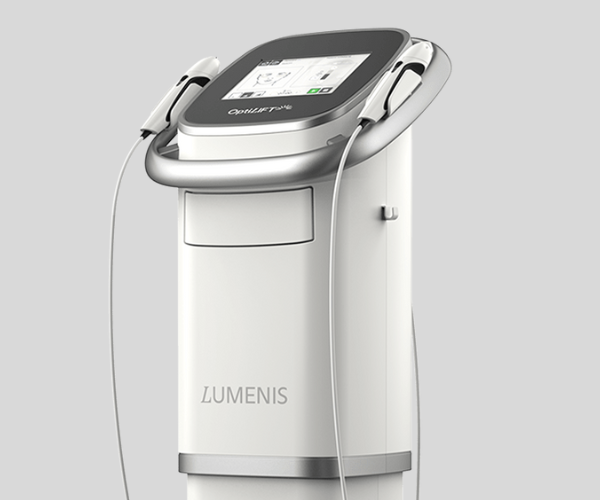
OptiLIFT — restoring blink and meibomian gland function

OptiLIFT is an advanced, non-invasive treatment designed to address one of the underlying causes of dry eye disease: impaired blinking and meibomian gland dysfunction.

The system combines controlled eyelid warming with gentle mechanical stimulation to restore more natural blink patterns and improve oil flow from the meibomian glands.

Healthy blinking plays a crucial role in spreading the tear film evenly across the eye and maintaining surface comfort. In suitable patients, OptiLIFT may help re-establish more effective blink mechanics, support gland function and improve tear film stability as part of a structured dry eye treatment programme.

LaserVision is the second centre in the UK to introduce OptiLIFT, reflecting our early adoption of emerging technologies that target the underlying mechanisms of dry eye disease rather than symptoms alone.

OptiLIFT is not suitable for everyone. A detailed dry eye assessment is essential to determine whether this treatment is appropriate and to integrate it into a personalised management plan, which may also include IPL, lid hygiene, and tailored eye drop therapy.

CAIRS for keratoconus management

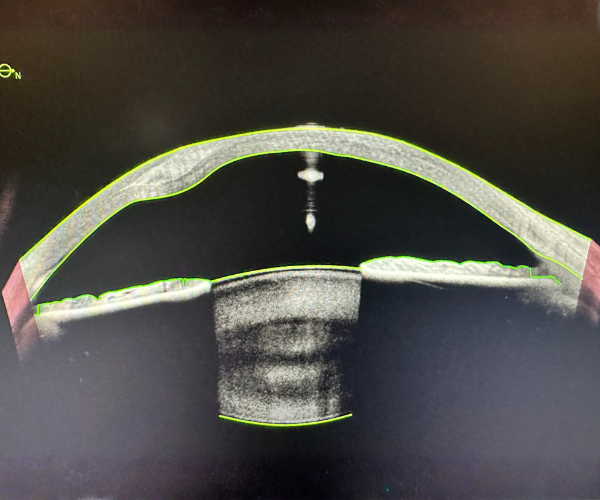
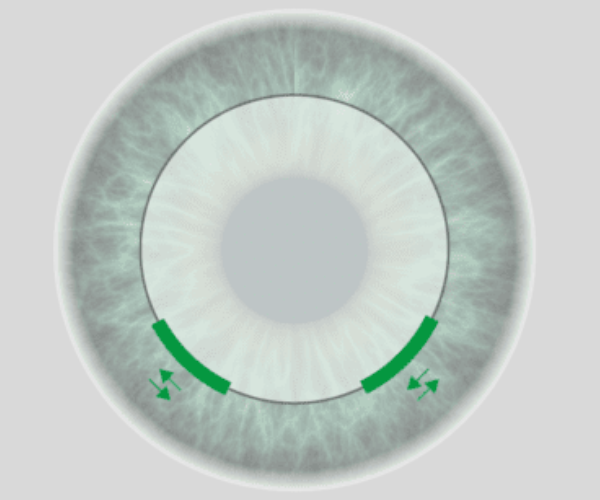
Corneal Allogenic Intrastromal Ring Segments (CAIRS) is a surgical treatment option used in selected patients with keratoconus. The procedure involves implanting small segments of donor corneal tissue into the cornea to help improve its shape and stability.

Unlike synthetic ring implants, CAIRS uses natural donor tissue, which may offer improved compatibility with the eye. In appropriate cases, this approach can help reduce irregular corneal shape and improve vision quality, often used alongside glasses or contact lenses rather than replacing them entirely.

CAIRS is not suitable for all patients with keratoconus. A detailed corneal assessment is required to determine whether this treatment is appropriate, and it may be used alongside other keratoconus treatments as part of a personalised management plan.

SMILE / CLEAR

Third-generation laser assisted lenticule surgery (CLEAR)

CLEAR surgery (Corneal Lenticule Extraction for Advanced Refractive Correction) is a minimally invasive laser vision correction procedure used to treat nearsightedness (myopia) and astigmatism.

Third-generation CLEAR surgery represents an evolution of this technique, incorporating refinements in laser technology, treatment planning and surgical workflow.

LaserVision was the first clinic in the UK to introduce third-generation CLEAR surgery, reflecting our early involvement in the responsible adoption of newer refractive technologies. This experience supports careful integration of technical advances into established, surgeon-led clinical practice.

The procedure uses femtosecond laser technology to create and remove a small piece of corneal tissue (lenticule) through a small incision, reshaping the cornea without creating a large flap. For suitable patients, this approach may help preserve corneal structure and support a comfortable recovery, although outcomes vary and careful patient selection is essential.

Third-generation CLEAR surgery is not suitable for everyone. A detailed assessment is required to determine whether this technique is appropriate or whether an alternative laser or lens-based procedure would better meet your visual needs.

Floaters

YAG vitreolysis for eye floaters

YAG vitreolysis is a laser procedure used in selected patients to treat symptomatic eye floaters. The treatment uses focused laser energy to break up or reposition floaters within the vitreous gel, with the aim of reducing their impact on vision.

LaserVision is one of a small number of centres in the UK offering YAG vitreolysis. The procedure is performed following a thorough assessment to ensure it is appropriate and safe, as not all floaters or patients are suitable for this treatment.

YAG vitreolysis is not routinely recommended for everyone with eye floaters. During your consultation, a specialist assessment will determine whether this option is suitable or whether observation or alternative management is more appropriate.

Valeda

Valeda photobiomodulation for dry age-related macular degeneration (AMD)

Valeda photobiomodulation (PBM) is a non-invasive light-based treatment used in selected patients with dry age-related macular degeneration (AMD).

The Valeda system delivers precisely controlled wavelengths of light to the retina to support retinal cell function in the early and intermediate stages of dry AMD.

Valeda is CE-marked for ophthalmic use and has been evaluated in clinical studies for dry AMD. At LaserVision, Valeda treatment is offered as part of a consultant-led macular service, following detailed retinal assessment and ongoing monitoring.

Valeda treatment does not cure dry AMD and is not suitable for all patients. During your consultation, your specialist will assess the stage and characteristics of your condition and discuss whether Valeda may form part of an appropriate management plan.

SING IMT

The SING IMT (Implantable Miniature Telescope) lens

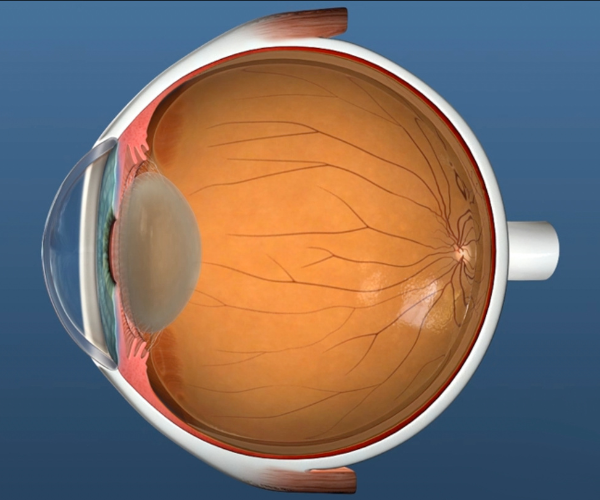
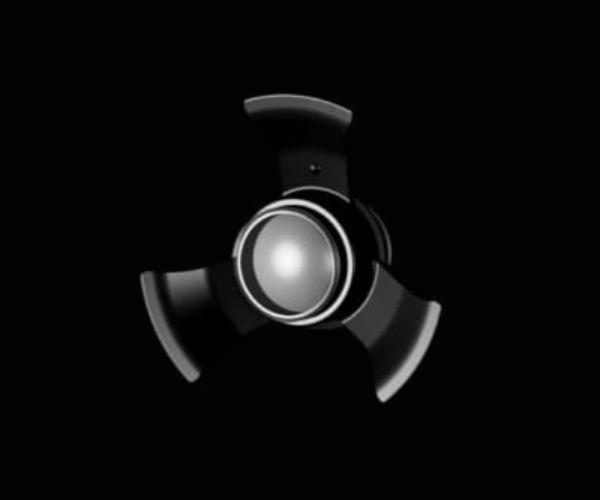
The SING IMT (Implantable Miniature Telescope) lens is a specialised implant designed for selected patients with advanced age-related macular degeneration (AMD).

The lens is implanted inside the eye during cataract-type surgery and works by magnifying images onto healthier areas of the retina, with the aim of supporting functional vision.

The SING IMT does not restore central vision or cure macular degeneration. Instead, in carefully selected patients, it may help improve the ability to recognise objects or perform certain daily activities when other treatment options are limited.

Suitability for the SING IMT requires a comprehensive assessment that includes retinal evaluation and consideration of visual rehabilitation. This treatment is offered only where the potential benefits are carefully weighed against the demands of surgery and postoperative adaptation.

The Scharioth Macular Lens (SML)

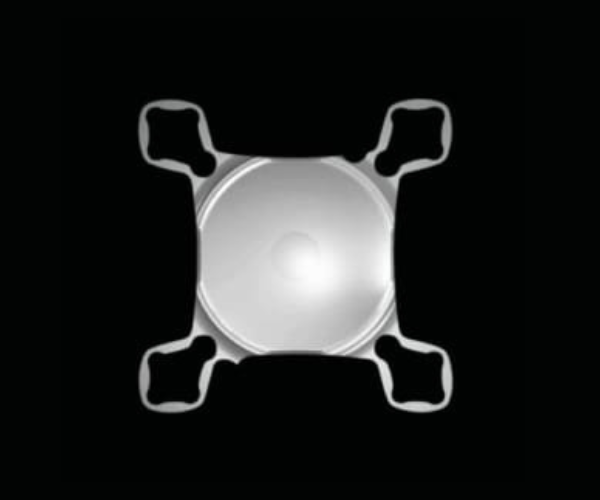
The Scharioth Macular Lens (SML) is a specialised intraocular lens designed for selected patients with advanced dry age-related macular degeneration (AMD) who have previously undergone cataract surgery.

The lens is implanted in the eye to enhance near vision by magnifying images onto the functional areas of the retina.

The SML does not cure macular degeneration or restore lost central vision. In suitable patients, it may improve reading and close-up tasks, while distance vision is typically preserved.

Suitability for the Scharioth Macular Lens requires detailed retinal assessment and careful discussion of visual goals. This treatment is offered only where the potential benefits are considered appropriate in the context of the patient’s overall eye health and daily needs.

Events